









How to tell your partner they’re gaining weight
How to tell your partner they’re gaining weight
I can’t believe I just wrote that out. Between you and me, there is no perfect way to bring this topic up. Especially when the person you’re speaking to is a woman.
Physical appearance is not a neutral subject for us. From a young age, our bodies are commented on, marketed to, and measured. Attraction, for women, isn’t just about desire. It’s tied to safety, and whether we feel chosen. Two highly sensitive things tied to every level of our wellbeing. No pressure😅.
Which is why conversations about weight or fitness rarely land as “just feedback.” What feels like a straightforward comment to one person can register as a loss of safety for many women.
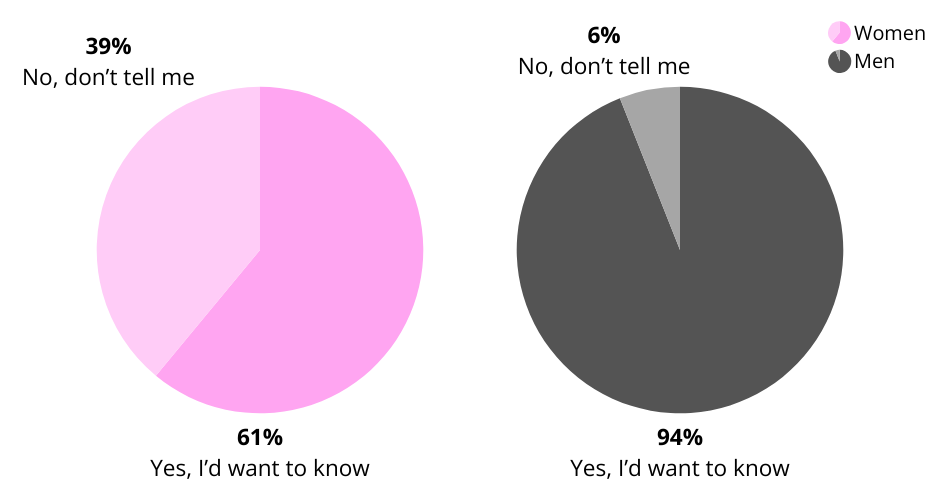
Before getting into how to have this conversation, it’s worth looking at how differently men and women answer a simple question: would you want your partner to tell you if they noticed you’ve gained weight? Because the gap isn’t subtle. And it explains why these conversations so often miss each other.
Would you want your partner to tell you if you’ve gained weight?
I polled my audience on Instagram. 1,700+ men and women responded. This data is not intended to be scientific. It does, however, reveal consistent patterns in how men and women experience this topic.
All data, charts, and written content are the intellectual property of the rightful owner. Reproduction, redistribution, or use of this material in any form requires prior written permission. Please contact asktheliaison@gmail.com for usage requests.
For many men, this conversation operates in a different frequency entirely. Physical change is often practical. Something to address directly. The chart alone already hints at this difference.
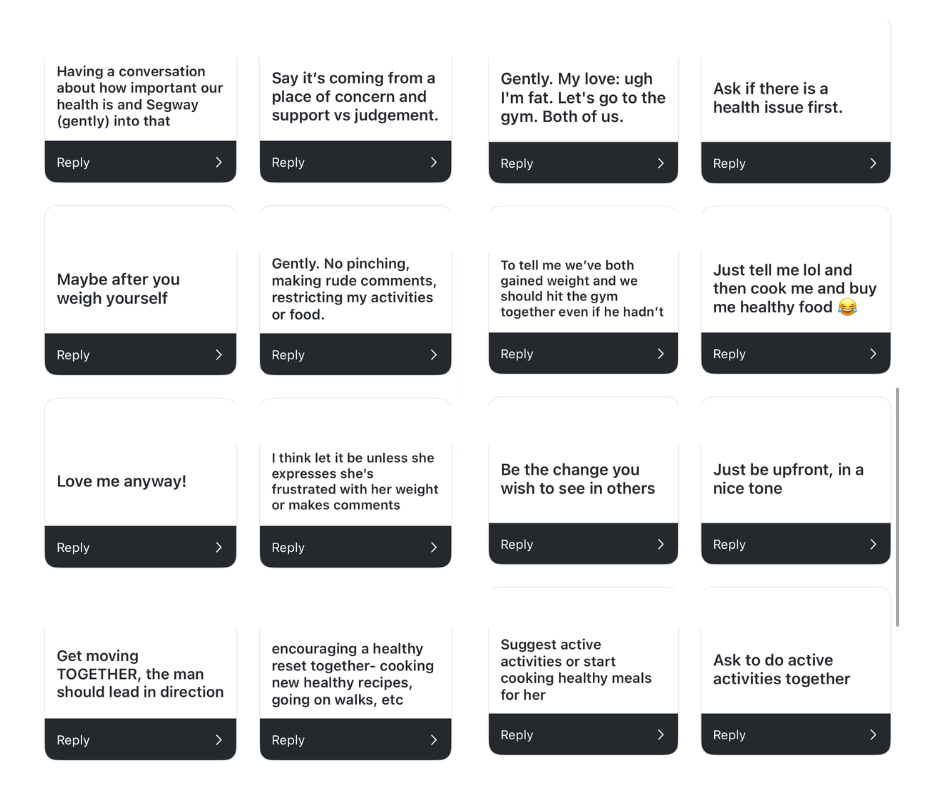
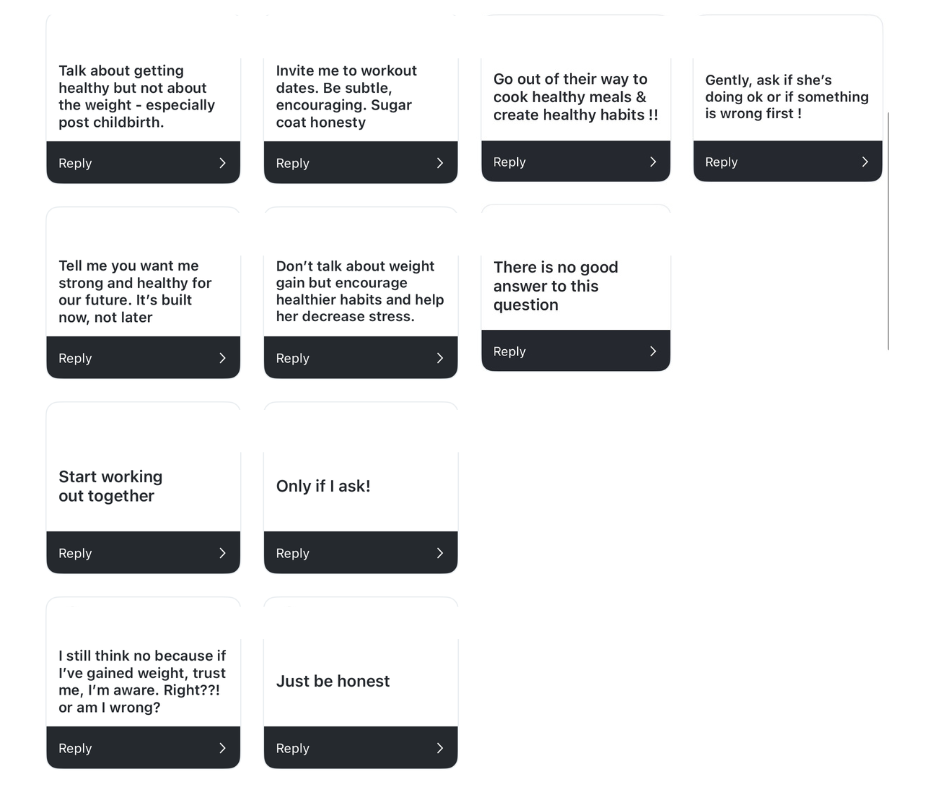
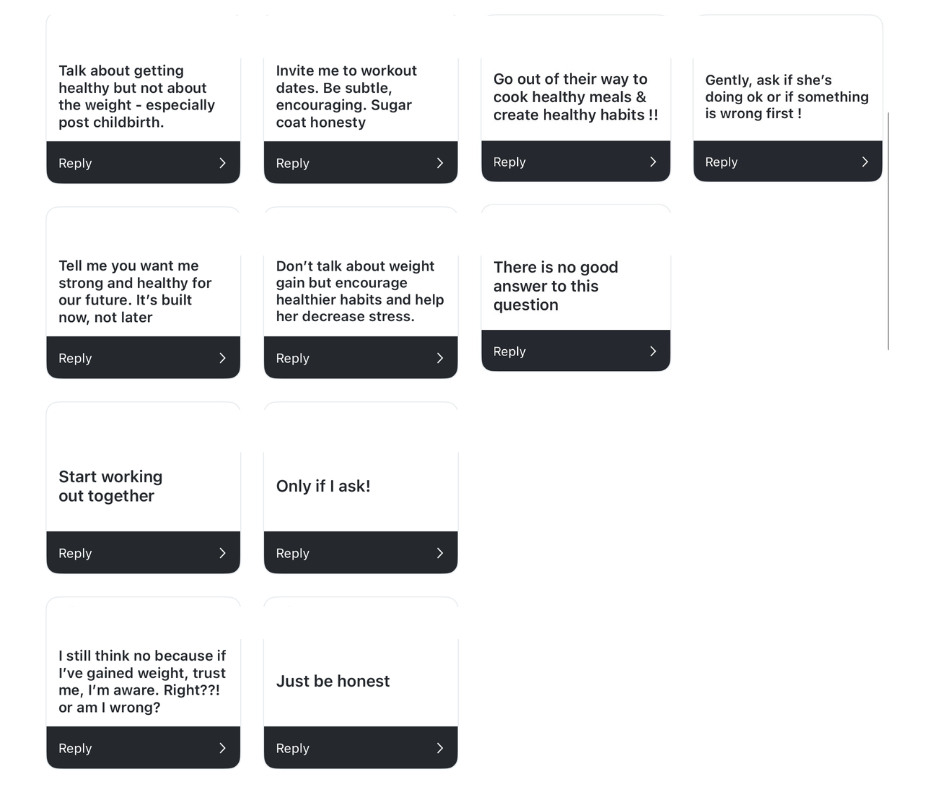
For women, the conversation rarely stays practical. As I’ve mentioned, it becomes layered with meaning, history, and questions of safety. When I asked women how they’d want this conversation handled, their answers were remarkably consistent.
25+ women share how to bring up the conversation
1. The “do it together” approach
This came up more than anything else. They want to feel like they’re on the same team. Framing health as a shared effort softens defensiveness and reduces the feeling that desire or the relationship itself is under threat.
Examples:
“Get moving TOGETHER. The man should lead in direction.”
“Start working out together.”
“Invite me to workout dates. Be subtle.”
“Hit the gym together.”
“Try a new activity together.”
2. Focus on health and habits, not weight
Many women were clear that language matters. Weight-centered conversations feel loaded. Health centered ones feel safer and more digestable.
Examples:
“Talk about getting healthy, not the weight.”
“Tell me you want me strong and healthy for our future.”
“Encourage healthier habits and help reduce stress.”
Love the response about stress. If you see your partner stressed, working out can help regulate stress before it ever becomes about weight.
3. Lead with action, especially around food
Several women pointed out that concern without effort feels hollow. Taking initiative, especially around meals, was repeatedly mentioned as more effective than commentary.
Examples:
“Go out of your way to cook healthy meals.”
“Cook for me me and buy me healthy food.”
“Start cooking healthy meals for us.”
Honorable mention: Say nothing or check in first
A smaller but important group said she’s likely already aware. For them, the kinder move is to ask how she’s doing or wait until she opens the door.
Examples:
“Only if I ask.”
“If I’ve gained weight, trust me, I know.”
“There is no good answer to this question.”
These responses don’t suggest women want it ignored. They want the conversation handled in a way that preserves dignity, partnership, and safety.
Women’s responses, in their own words:

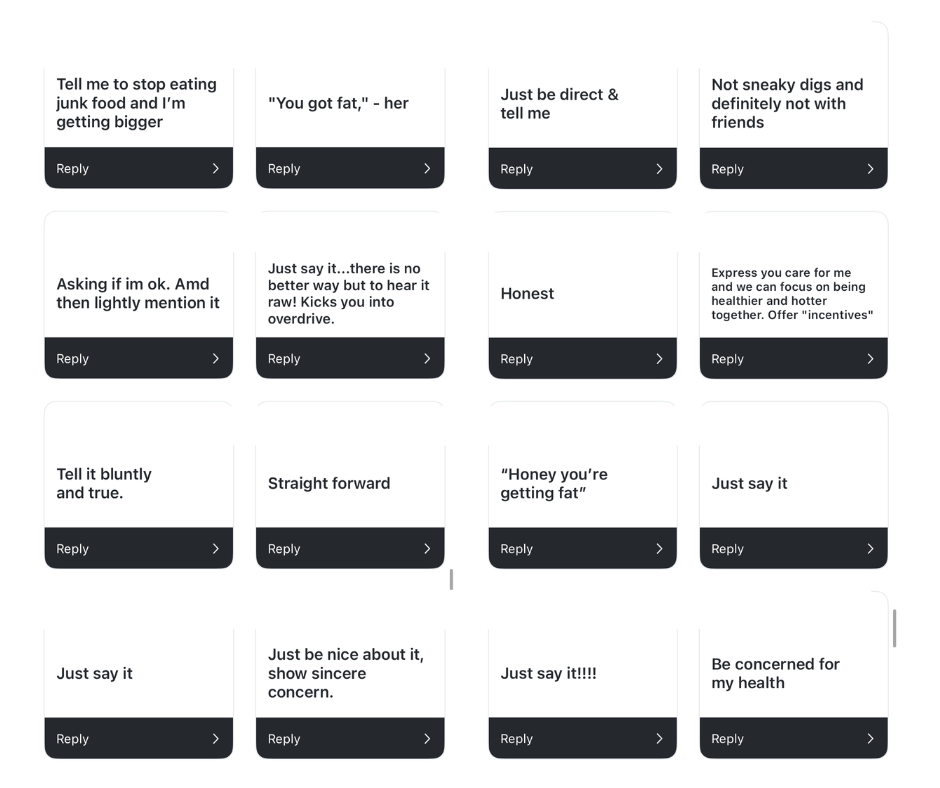
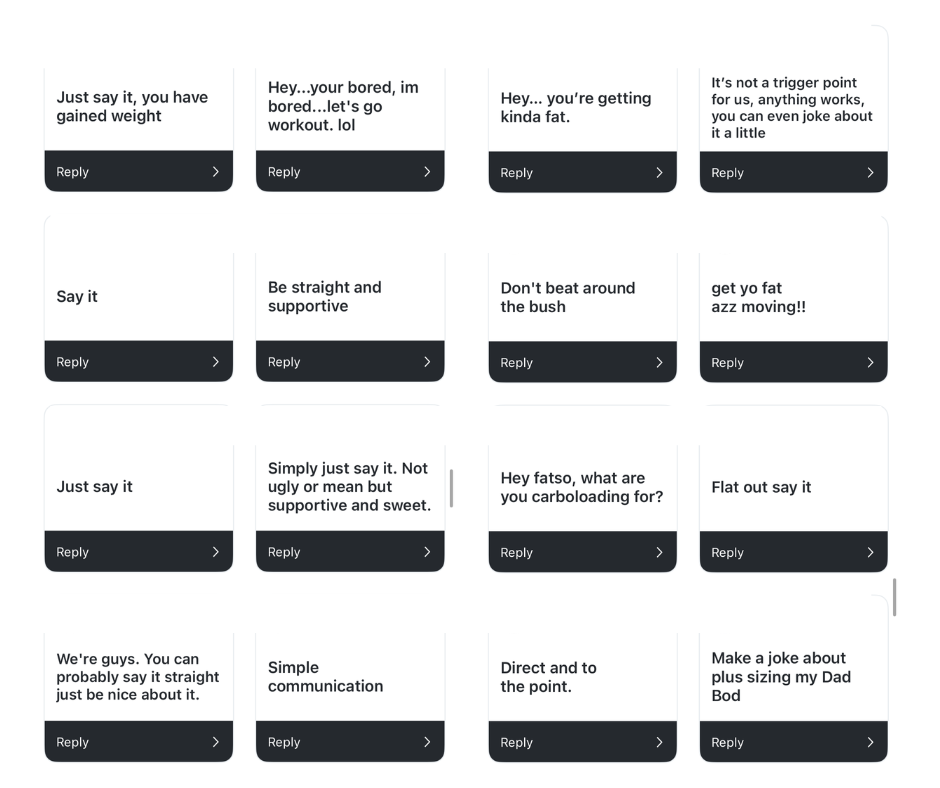
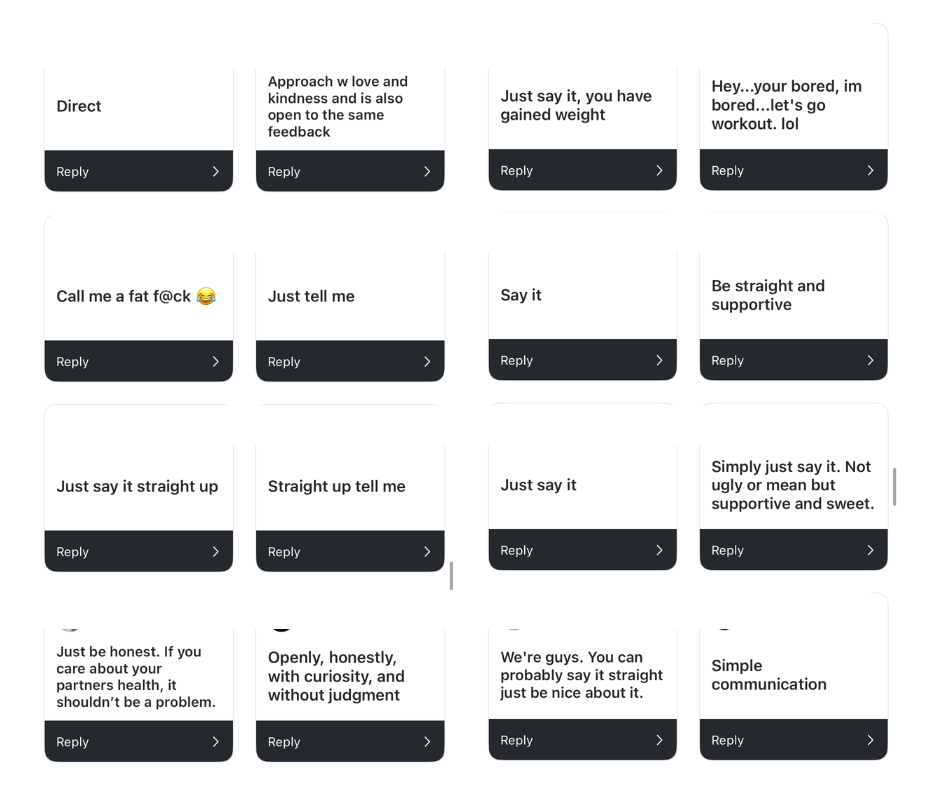
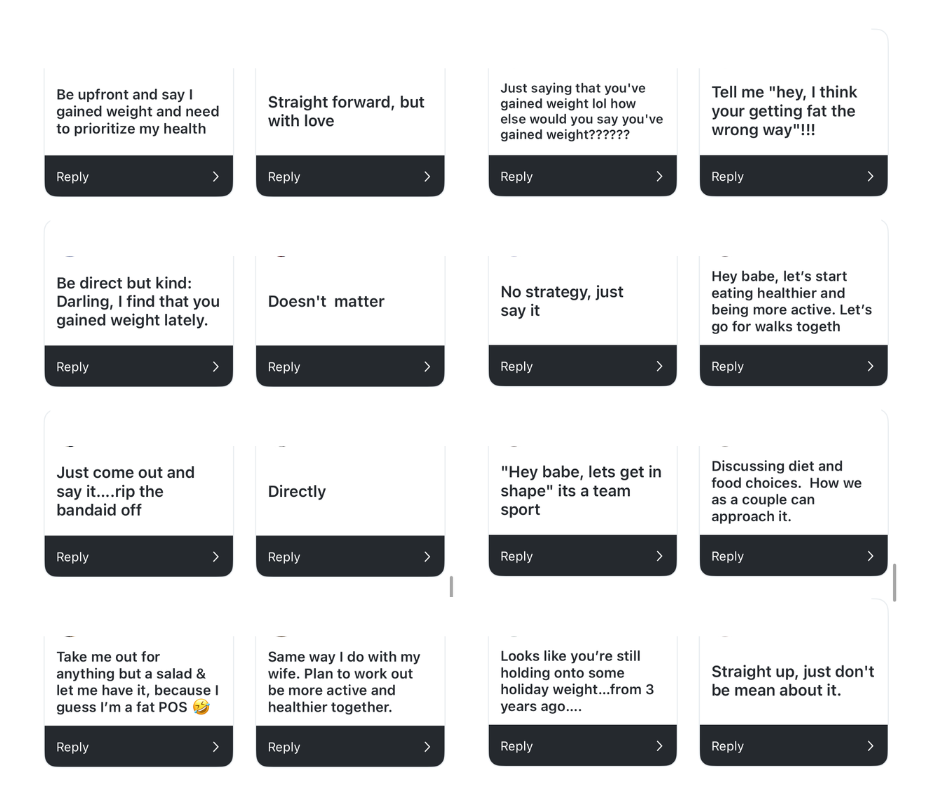
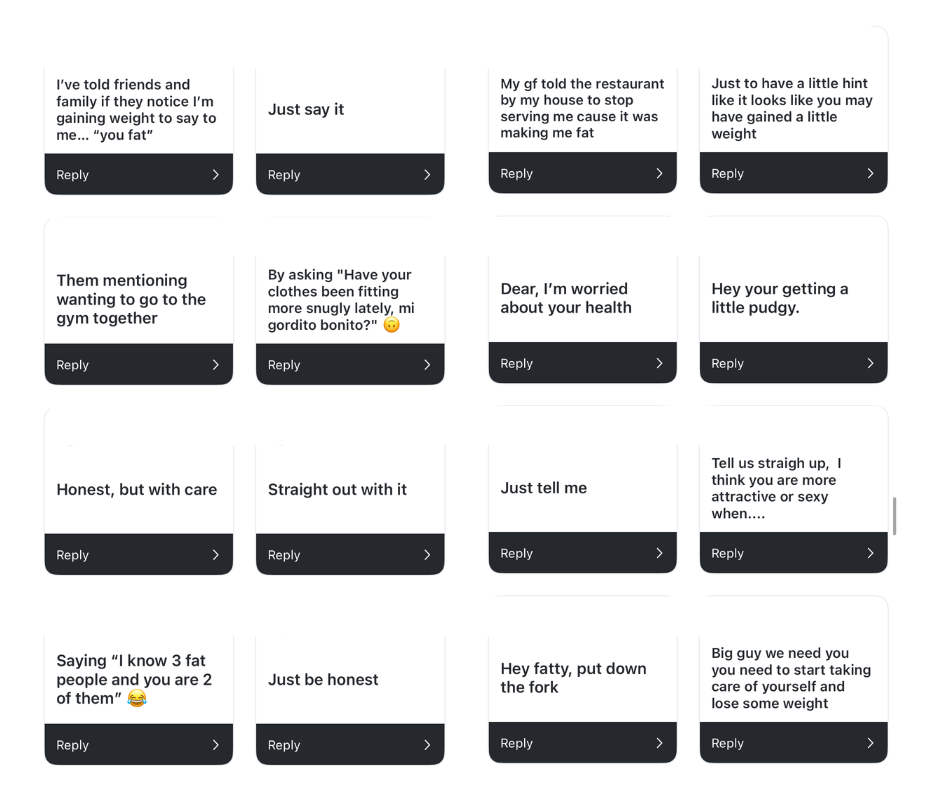
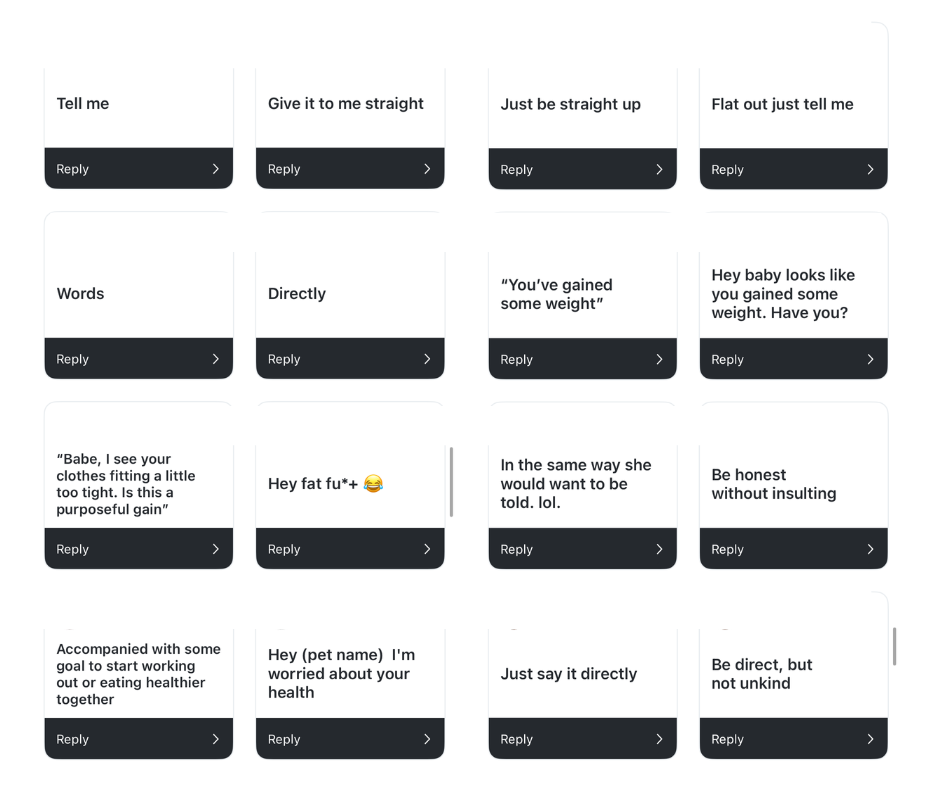
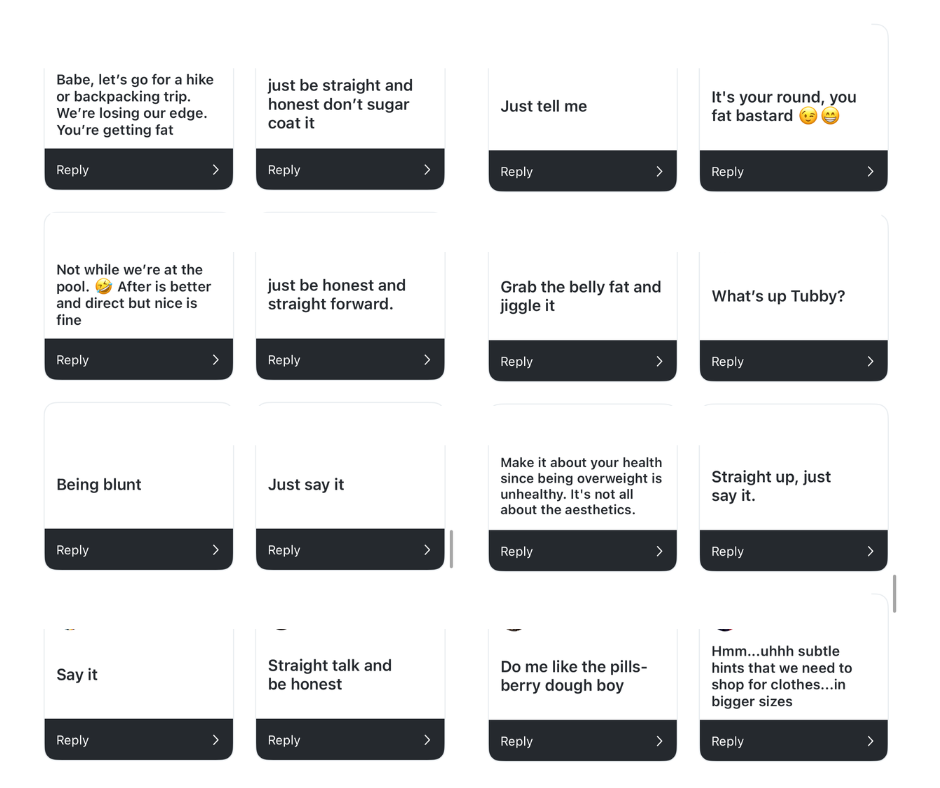
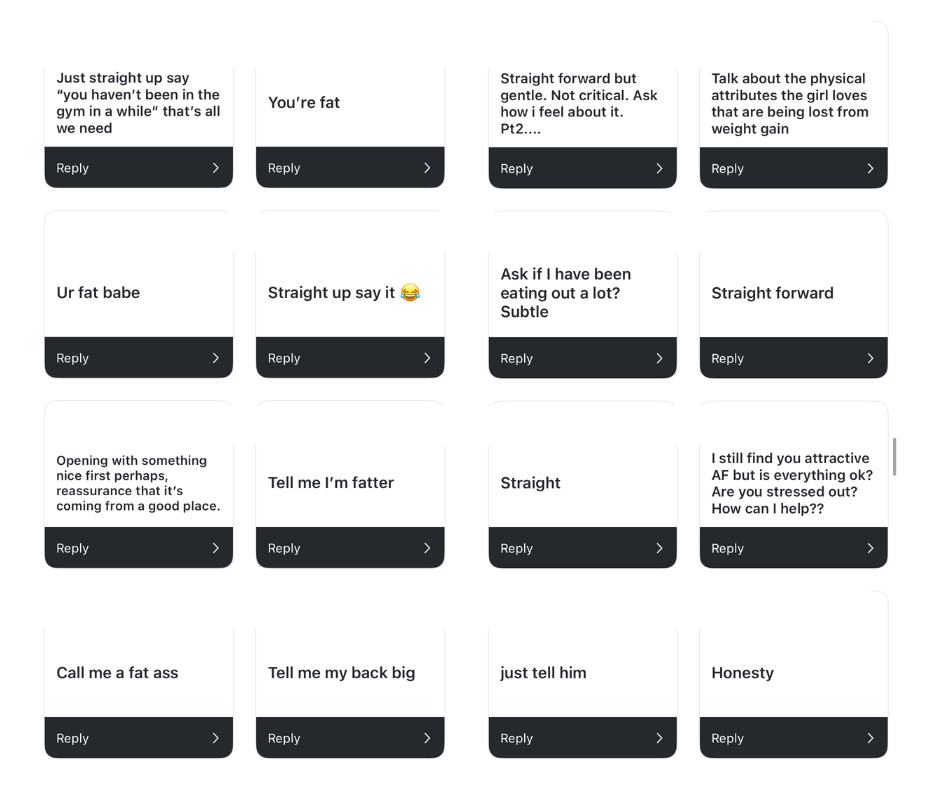
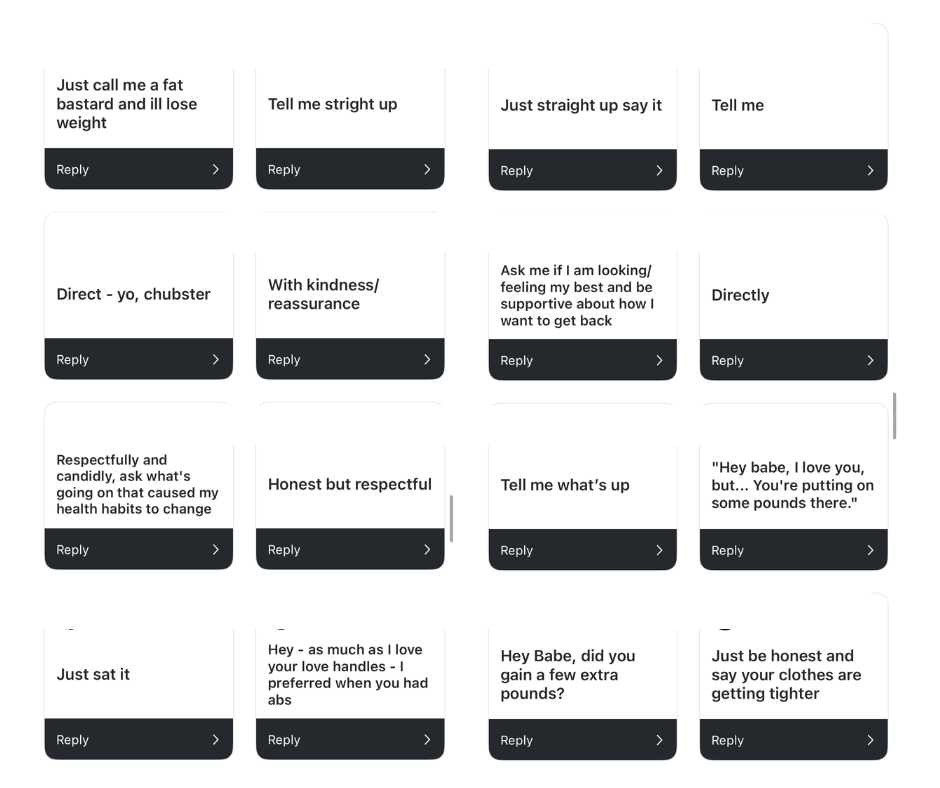
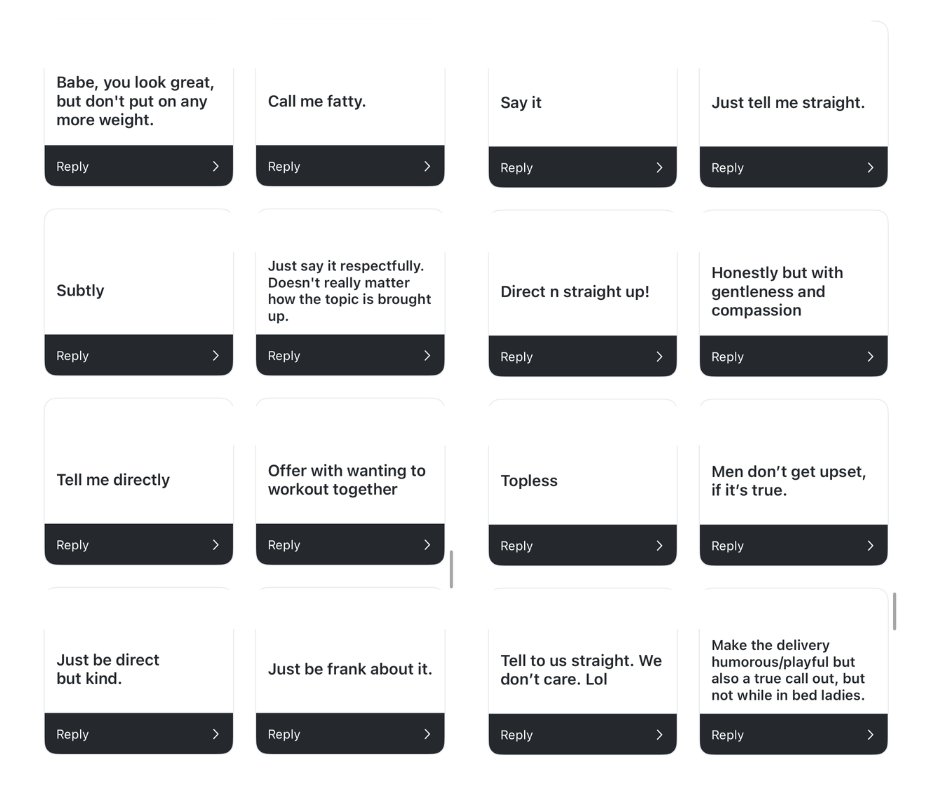
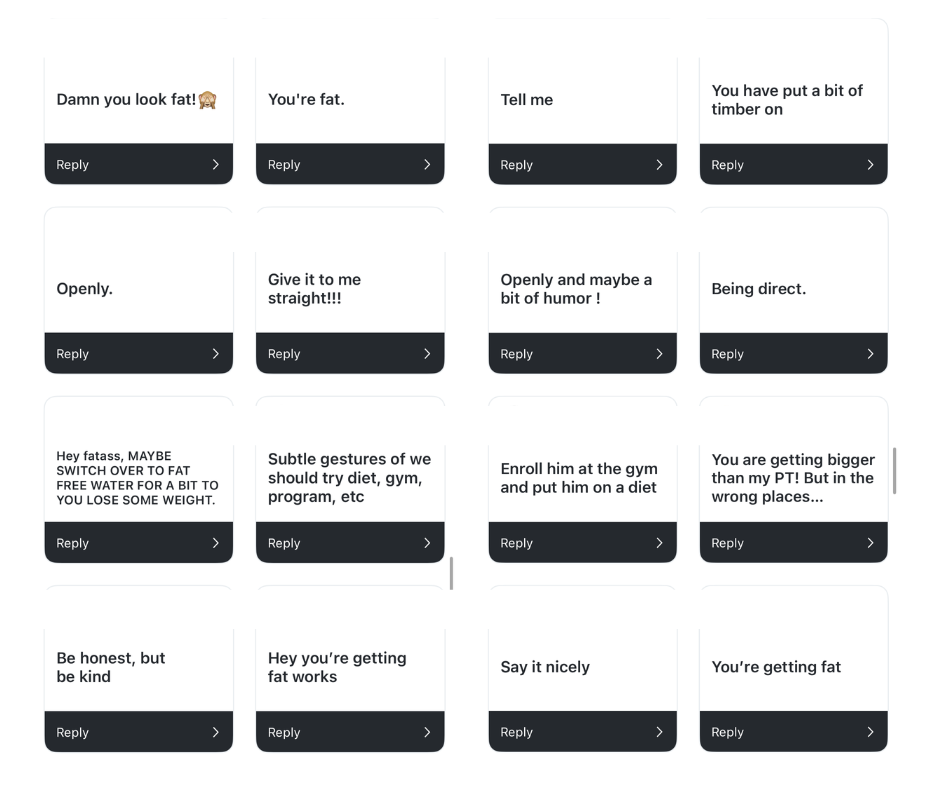
How men answered the same question:
When I asked men, “If your partner noticed you’ve gained weight, how should they approach the conversation?” their answers came from a very different place. For most men, physical change is practical and direct, not emotional. The contrast is clear below.
This is what I love about seeing the responses side by side. The difference between men and women isn’t subtle, and it isn’t ideological. It’s experiential.
Most men don’t want hints, or careful framing. They want clarity. Directness, delivered without cruelty, was overwhelmingly preferred. For many men, weight gain isn’t experienced as a threat to identity or safety. It’s information. Something to address, adjust, or act on.
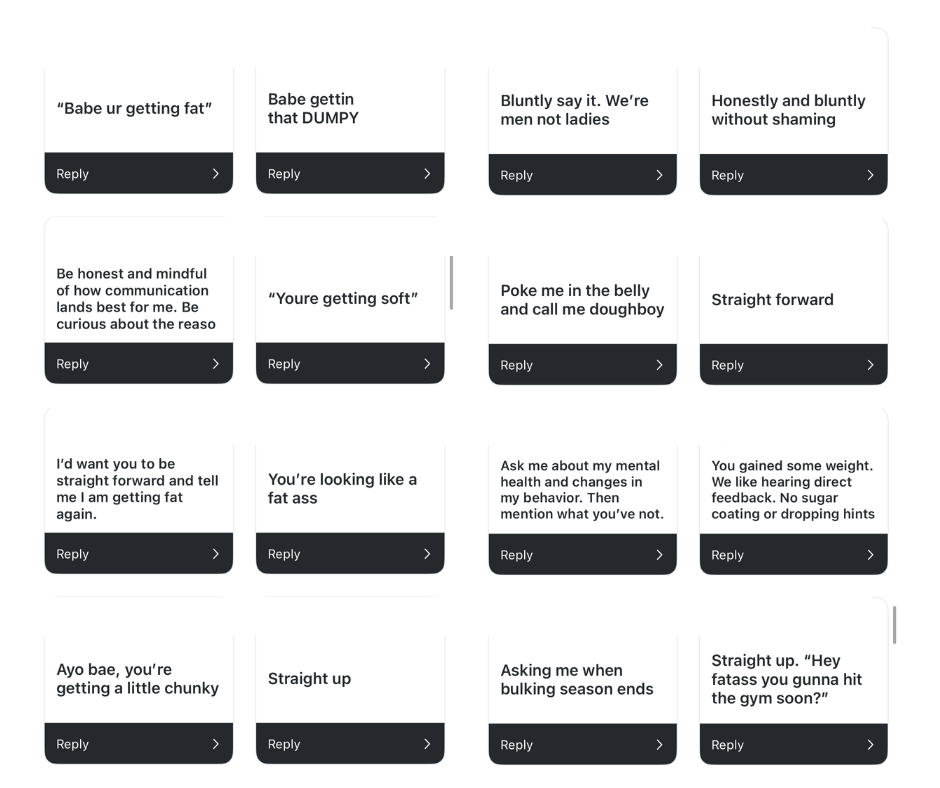
The problem isn’t that one side is wrong. It’s that the same conversation carries different stakes. When you understand that, the goal shifts from saying it “right” to saying it in a way the other person can actually hear. So please use the responses above as a guide for how to approach your own conversation, not a script to follow.
Thank you to all the men and women who shared their responses and experiences with me.
If you found this insightful, share it with some friends!
xX,
Stephanie